Showing posts with label Homemade natto. Show all posts

Wednesday, May 7, 2014

Natto making update...I found the perfect soybeans for natto!


I found the soybeans I really like!

 photo IMG_2293_zpsfc32ccef.jpg
A box of sample soybean arrived the other day. They were 3 different varieties of soybeans for different purposes, all organic and non GMO, by Signature Soy, 5th generation soy farm in North Dakota.

 photo IMG_2241_zps6ffa4f07.jpg  photo IMG_2251_zps0bd7ac36.jpg
I first tried a variety for natto (SS2802) to make my homemade natto, and I was amazed by its quality. The beans were perfect small size and nicely nutty. It was like eating the special artisan natto from Japan!

I learned that the company also export soybeans to major natto manufacturers in Japan. That's why my homemade natto made from their beans tasted so authentic!

 photo IMG_2260_zpsa5f765f1.jpg  photo IMG_2262_zps8df772c7.jpg
With Uruguay koshihikari rice, made in double-lid donabe rice cooker, "Kamado-san", it was my super happy moment. My special natto rice, made in collaboration between USA, Uruguay, and Japan.

Natto is a wonder food. For 5 kg of soybeans, only 3 g of natto bacteria is needed to make natto. The bacteria multiplies by more than 4 billion times after 24 hrs of fermentation in the right conditions. Amazing, isn't it?

My basic natto recipe is here.

Happy natto. Happy donabe life.

Friday, June 22, 2012

Donabe barley rice, homemade natto, and super jumbo donabe!


My happy meal is...

Freshly made rice with my double-lid donabe rice cooker, "Kamado-san", with my homemade natto (fermented soybeans).

Photobucket Photobucket
This authentic donabe rice cooker makes premium quality rice with such an easy preparation.  I made "mugi genmai gohan" (brown rice with pressed barley) this time.

Photobucket
Perfect bowl of rice with my homemade natto...super nice.

Photobucket
Great news.  We now offer super jumbo Kamado-san...this can cook up to 10 rice cups (1.8-qt) of rice!  This special Kamado-san is also double-lidded and can be used only on an industrial gas stove top (large ring stove top).  This is made entirely by hand only upon order by skilled craftsmen at Nagatani-en in Iga, Japan.  We got a few units specially shipped from Japan just recently.  Isn't it so beautiful?  We don't offer it from our online donabe shop, so please contact us directly to order.  Our retail price is $1,250.  You can feed premium-quality rice to a big crowd with this super jumbo Kamado-san!

Happy donabe life.

Sunday, May 13, 2012

Making Natto (Fermented Soybeans) from Scratch


Natto (fermented soybeans) is one of my all time favorite foods...or, maybe it's the all time favorite food of mine.  That's why I'm extremely excited about my homemade natto.  It tastes amazing...the best natto I've ever tasted!  Now, I can't go back to commercial natto, anymore.  And the great thing about homemade natto is that it's very easy to make, as long as you have the right equipments and patience.  Ingredients for natto are only soybeans, water and natto bacteria! For soybeans, I suggest you choose small organic non-GMO kind.

Photobucket
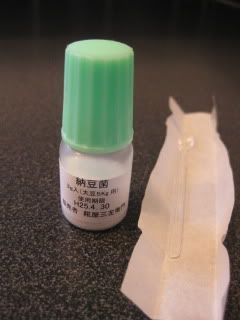
As a fermentation starter, you need Natto bacteria (culture).  It comes with a special spoon to measure it.  I brought it back from Japan, but you can also order (different brands) in the US.

Photobucket
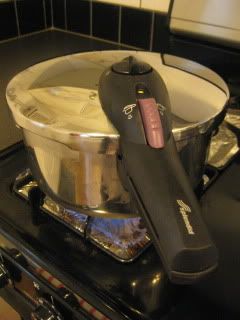
You can use a regular pot to cook soybeans, but pressure cooker will save so much of your time.  I bought a pressure cooker just for this purpose!

Photobucket
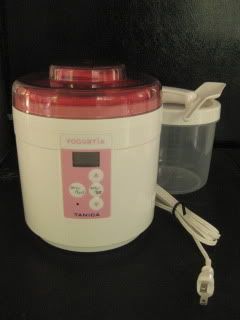
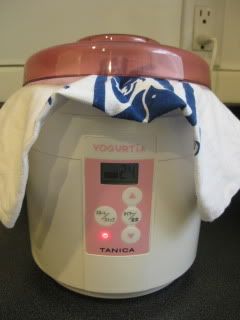
My special secret weapon...yogurt maker.  I also brought it back from Japan.  It's Tanica's Yogurtia, which is a light-weight and extremely functional yogurt maker with temperature-control and timer functions.  Tanica made the first yogurt maker in Japan in 1971, and their yogurt makers are 100% manufactured and quality-checked in Japan.  If you order a different brand's yogurt maker in the US, I would suggest that it has both temperature setting and timer.

Natto is a super-health food.  The health benefits of Natto are considered to be extremely remarkable with high level of different kinds of vitamins, fiber, calcium, protein, etc. associated with enzymes in natto as well as soybean itself.  Nattokinase (enzyme in natto) is considered to help making your blood smoother.

Now, here's how to make natto from scratch.

Photobucket
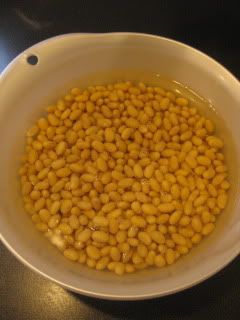
Rinse and soak 200g (about 7 oz) soybeans in ample amount of water overnight (about 12 hours).

Photobucket Photobucket Photobucket
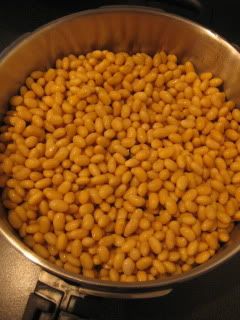
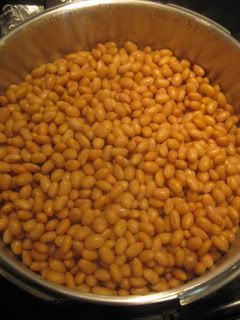
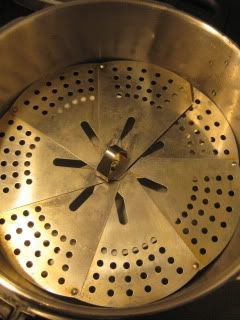
In a 4-qt or larger pressure cooker, fill about 350 ml (about 1.5 cups) water, and set a steam grate or basket.  Add the drained soybeans and cover.  Set over high heat.  Once the pressure is built, reduce the heat to low and cook for 45minutes.  Turn off the heat and let it rest for 20 minutes before opening the lid.  The beans should be very soft - you might feel they are almost too soft, but they will become tighter after fermentation.

Meanwhile, make sure to sterilize any containers and spoons to be used for fermenting soybeans.  For a metal spoon, I pour boiling water, and for container and ramekin, I boil water in them microwave.  This will prevent possibly letting the unwelcome germs to grow during fermentation.

Photobucket
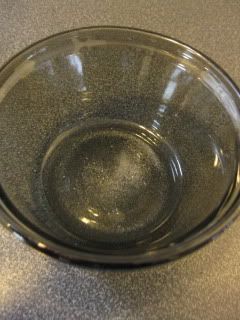
In a sterilized ramekin, combine a little shy of 1 teaspoon water with 0.2 g (about 0.007 oz - 2 heaping spoonfuls with a special measuring spoon) natto bacteria.  Set aside.

Photobucket
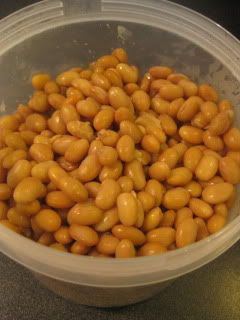
Transfer the soybeans to sterilized yogurt maker's container and add the natto bacteria solution while the beans are still hot.  Stir with a sterilized spoon gently to evenly distribute the bacteria.  (I normally do this in two steps - transfer half amount of soybeans to a container and stir with half amount of the natto bacteria solution, then add the remaining soybeans and natto bacteria solution and stir again.)


Photobucket
Set the container with the soybeans in yogurt maker.  Cover with a piece of cloth and lid.  The lid should be slightly shifted so that there is enough space for the bacteria to breathe (very important for fermentation).  The cloth will absorb evaporated moistures during fermentation and prevent the beans from getting wet from water drops.  Set the temperature of yogurt maker at 45C (113F - about 110F is ok) degrees and timer  for 24 hours.

Photobucket
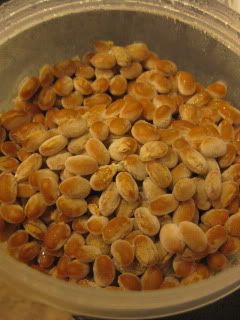
After 12 hours, you can see the beans are getting fermented.

Photobucket Photobucket
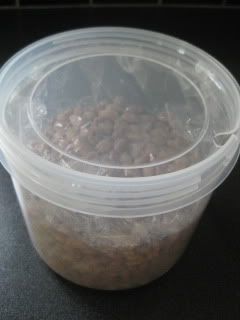
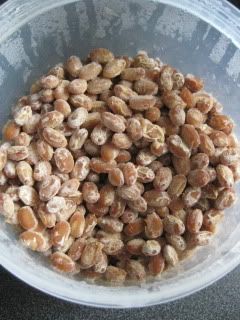
After 24 hours, beans are really fermented and ready to rest.  Cover the surface with a piece of plastic (to prevent the natto from getting dry) and again with a lid.  Let the natto rest in refrigerator for 48 hours.  This resting time will make the flavor of the natto settle.

Photobucket Photobucket Photobucket
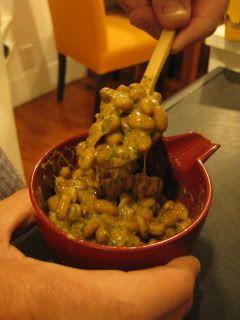
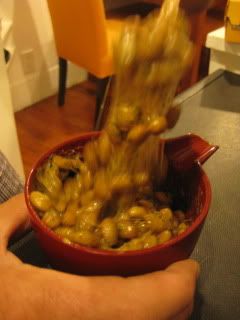
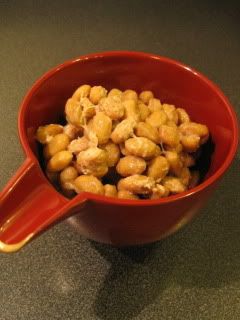
Natto is now ready!  To enjoy natto, you can transfer the amount you want to eat to a small bowl and mix by spoon for at least 100 times before adding any seasoning.  The more you stir, the more the amount of amino acid and enzymes in natto will be increased, and natto becomes better in both flavor and nutrition.  Add your choice of seasoning (I like natto with just a pinch of sea salt, or sometimes with iri-zake, soy sauce, karashi mustard, and ao-nori).
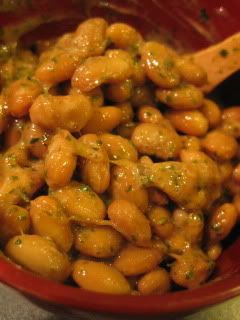
Photobucket Photobucket
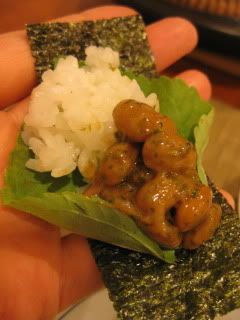
Enjoy natto with freshly-made donabe rice.  (In the picture, I made nori wrap with natto, sesame leaf, and rice).


Happy healthy natto life.  Happy donabe life.

Tuesday, May 1, 2012

My First Homemade Natto (Fermented Soybeans)


Happy May Day!

It's a real special day this year, because today is our 10th Wedding Anniversary.  Thank you for being my wonderful husband past 10 years, Jason.

It's also my nephew, Wataru's birthday.  Happy Birthday, Wakkun.
Photobucket Photobucket Photobucket
One more special thing about May Day is that my grandfather wrote lyrics of Japanese May Day song ("Sekai wo tsunage hanano wa ni"), so I always remember my grandfather on May Day.  He was a lyricist, poet, book author and music producer.  A few weeks ago, when I was back in Japan, I luckily found one of his old books (first print!) online and ordered it.  He was also one of the first jazz critics in Japan!  This is one of his books about jazz and it was published in 1953.
Photobucket
Apart from May Day, I made my first batch of NATTO (fermented soybeans) last week.  I brought back natto bacteria from Japan and some other equipments which are needed for making natto.  The entire process (including soaking beans) takes 2 full days plus 2 days of resting natto in the fridge.
Photobucket

I served my first homemade natto with plain donabe rice, cooked with double-lid donabe rice cooker, "Kamado-san". The match was made in heaven.  Natto tasted unbelievable.  It was so unbelievable that it tasted better than any commercial natto (including expensive kinds) I've ever tasted...it was such a shocking and dramatic moment for me!  My natto tasted so fluffy, natural, flavorful, and nicely slimy.  With the premium quality donabe rice, I felt I didn't need any other food for my meal.

Since I didn't get to take pictures of the process, I will post the process next time.

Happy fermentation.  Happy donabe life.